After being laid off this fall, I’ve struggled to find direction. I thought about using my severance for a long-term investment—like a boob job—but I ended up climbing Mount Kilimanjaro.
“Oh, was this a lifelong dream or another spontaneous decision?”
Nope, I did it to piss off my younger sister.
Batool went to Tanzania two years ago to summit Kilimanjaro, one of the seven highest summits in the world. She didn’t make it, so I made a mental note to one day one-up her.
If you’re considering climbing Kili, good for you—but don’t look to me for reassurance. I’m literally just a girl who got in way over her head.
Here’s what was going on in my mind during the six-day trek:
“I go to the gym. I can do this.”
I’m a lifelong gym girl. I go two hours a day, four days a week, spending $120 a month—at least when I’m not too anxious to leave the house. I take pride in moving.
When I heard that Mount Kilimanjaro was “walkable,” I thought, “I’m going to make that summit my b*tch.” (The opposite happened.)
They told me it would be cold. I said, “Bet, I’m from Canada, I can handle it.” (I could not, in fact, handle it.)
They said it would be hard to breathe. I said, “I have anxiety and forget to breathe all the time.” (I was right about this.)
They said it was USD 1,600 for six days. I said, “I love poor financial decisions. Where should I sign?”
Wtf? This feels endless
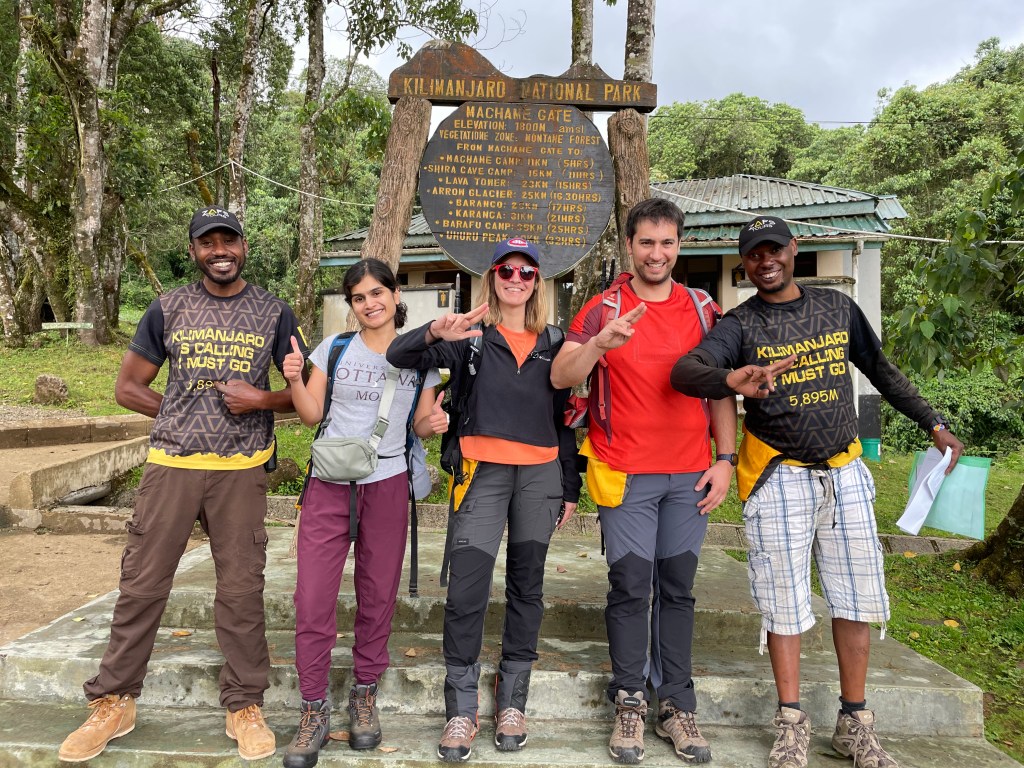
We started at Machame Gate, which is 1,800m above sea level. We drove past villages and coffee farms to get there. Our guides made us eat a massive lunch before starting to ensure we’d have energy for the 11km ahead through the rainforest. It was calm and serene. We got to know our guides better as we walked and talked.

An hour in, our breaths thickened. Everyone was silent to save energy. Time started taking its time. I kept checking my watch for motivation, but the ascent to the first camp felt endless, especially after the 8km mark. I knew it was getting closer, but the climb seemed to go on and on. It felt like we were in a boomerang loop.
“God really did that.”

Most times, looking up or ahead made me want to throw up. But anytime I built up the courage to not gag due to altitude sickness, the views were nice. Catching a glimpse of the stars during my several nightly pee runs was pretty romantic.
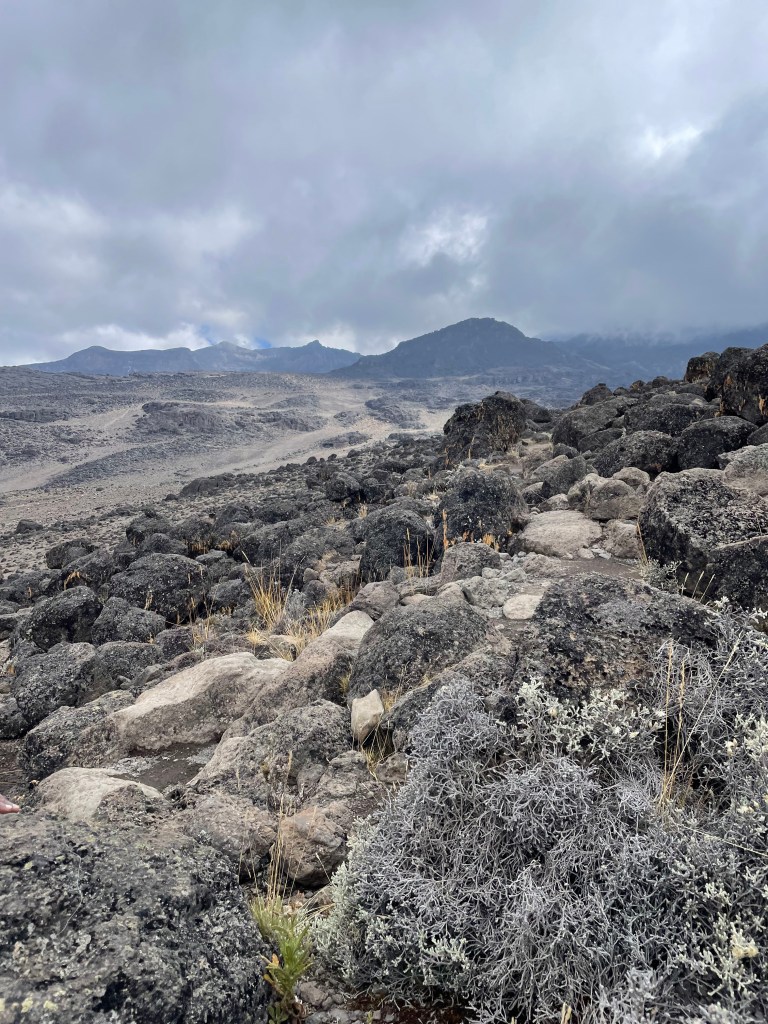
The forest melted into moorlands. Moorlands overlapped desert valleys. It was gorgeous, but I couldn’t appreciate it for long since every ounce of energy needed to be focused on stepping forward.
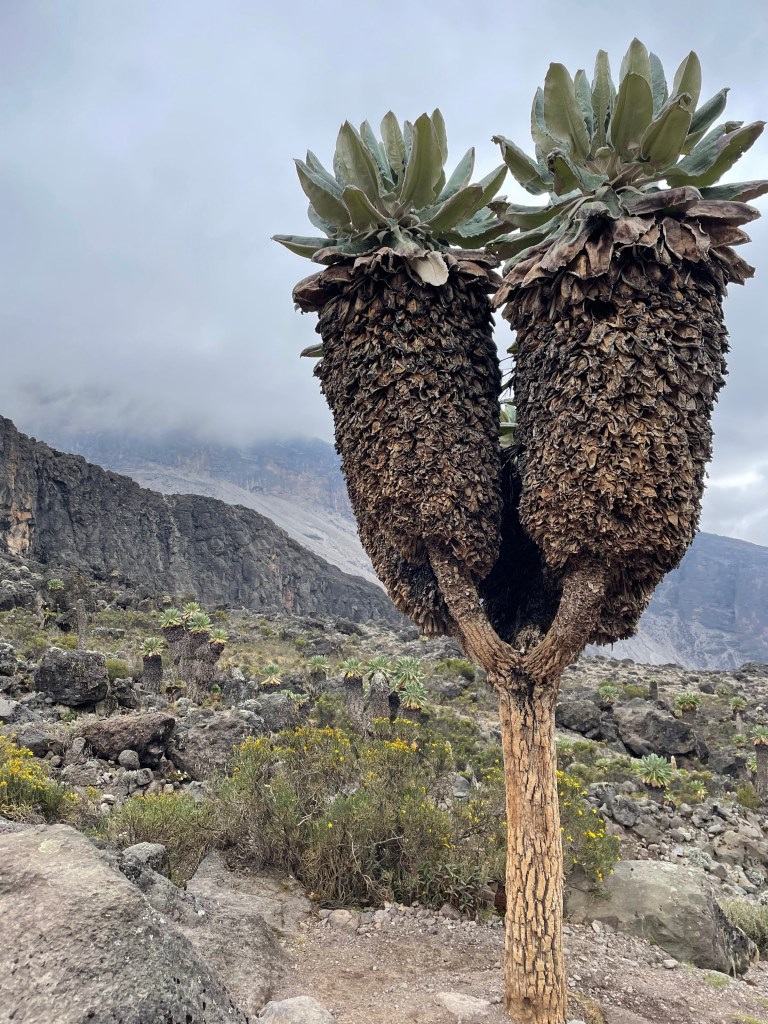
I saw plants that looked like they belonged in Sponge Bob’s Bikini Bottom.
“Allah really popped off here,” I thought.
“This is all temporary.”
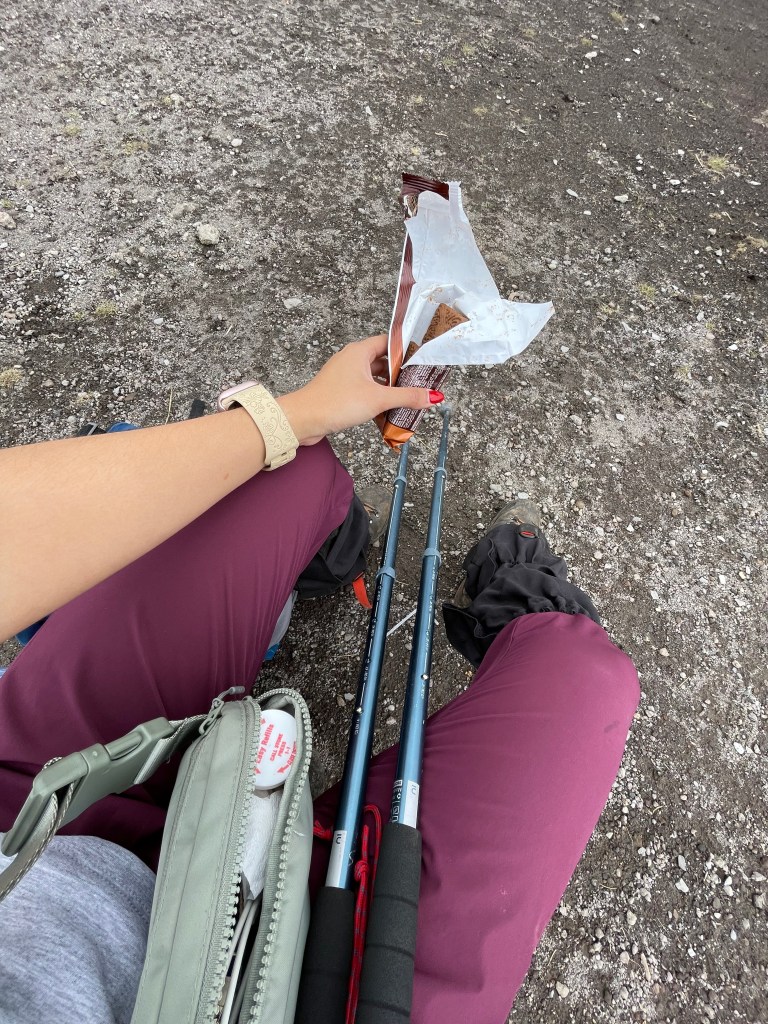
Before I left Toronto, I asked my camp-loving partner if he had any words of wisdom. He told me to remember that everything is temporary—the discomfort and the pleasures. When I felt fatigued, I’d ask for a break. As soon as I’d find a rock to sit on, Mousa’s voice echoed in my head. “This break is temporary,” it’d say. It was an annoying reminder to keep moving. When disgust crawled my skin at the thought of peeing behind rocks, I assured myself I’d eventually be in a warm shower. When the altitude made migraines worse, I reminded myself that Advil would eventually kick in.
“My nephews are going to write a report about me someday.”

Whenever I questioned why I was putting myself through this ordeal, I thought about my nephews. I convinced myself they’d see their cool aunt who travels and buys them presents as a role model and write about her for an English paper someday. I daydreamed about going to their school, meeting their teacher, and having kids who had no idea how to tie a shoelace clap for me.
“I have to pee.”

The way my bladder fought me should be written about in history books. I was on altitude sickness medication called Diamox, which has one side effect: uncontrollable peeing. Add to that the 3-5 litres of water guides forced us to drink, and you get the idea. I’m great at holding my pee at sea level, mainly because I hate public toilets, but in the wilderness, the dams burst. Every time I got into a trekking rhythm, I had to pee. Every time I started to fall asleep, I had to pee. Every time I peed, I had to pee.
“I’m the better sibling.”
The only “conversation” during our 6-10 hour daily hikes was answering “Are you okay?” every few minutes. It was impossible to breathe and talk. So I did what every middle child does; I fantasized about rubbing my victory in my sister’s face. I imagined my parents announcing my success in the WhatsApp group chats of Pakistan. I pictured Batool feeling guilty for tattling on me for getting a belly piercing 14 years ago. I envisioned accepting the Best Sibling Trophy at the Oscars. My pettiness made me laugh even though my quads were on fire.

Fun fact: After summiting, I used my last bit of energy to make a video on my guide’s phone for the tour company, asking them to send it to my sister with a message letting her know I did it.
This would be impossible without a team.

It’s no secret that Africa has long been treated as a playground for wealthy white tourists, often with little regard for the people who live there. Europe and parts of the Middle East ravaged the region for centuries, extracting gems, spices, and people. After spearheading ivory trades and destabilizing entire villages, they had the audacity to preach sustainability after Tanzania’s independence. My guides told me that tribes have lived around the mountain for generations, but their movement became restricted when Kilimanjaro became a national park.
During my six days on the mountain, I was the only person of colour among the tourists. I realized that for many, being able to afford a holiday here was a luxury. Most people climbing Kilimanjaro were white, spending thousands on what, for them, was an adventure—but for guides and porters, was simply a means to survive.
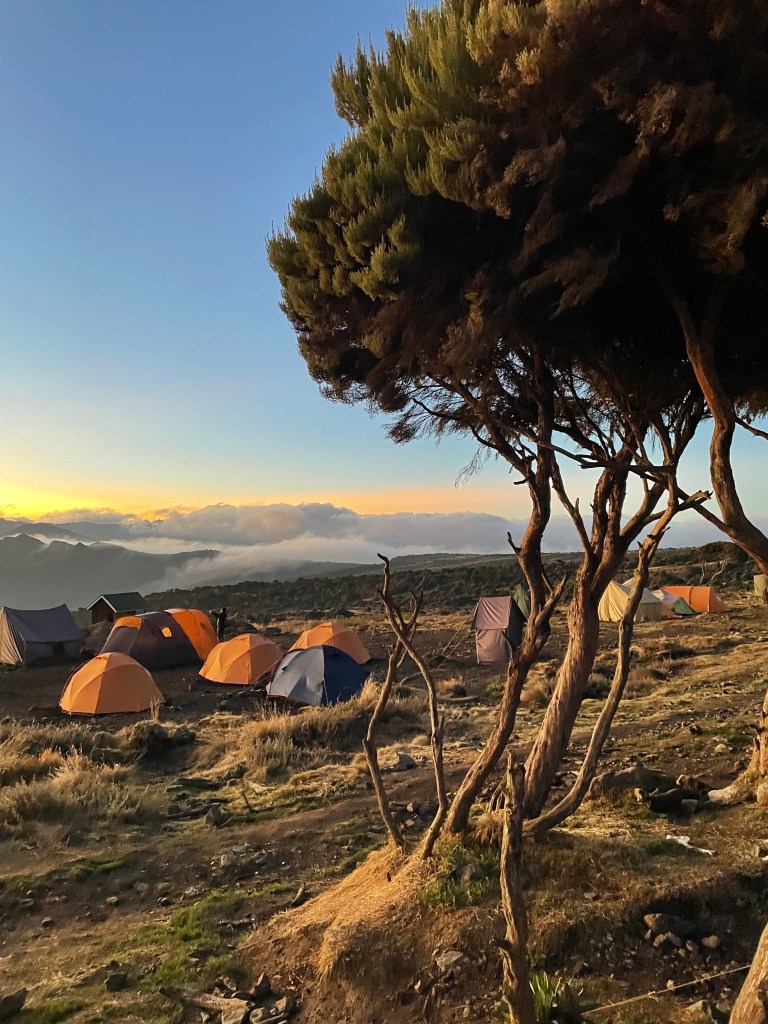
The park rules require a guide to accompany every foreign trekker. In our group of three trekkers, we had a team of 15 (guides, chefs, and porters) who carried everything from camp to camp: our gear, tents, food, and even a portable toilet. Some did this gruelling work in Crocs and jeans. Their knowledge of the mountain was unparalleled; they zoomed past us each day with giant bags, cheered us on when our spirits waned, checked our vitals, fetched water, set up our tents, and cooked our food. It was giving neo-colonialism.
Seeing their expertise made me think of what an intimate connection they must have with this land—and yet, they were there to make our dreams come true. I couldn’t have survived a day on Kilimanjaro without them. I am forever in their debt.
If you take away anything from this, let it be to research the company you want to do your trek with. Ask about the conditions porters work in, whether they have the proper equipment, how much they’re being paid, and if anyone is underage. I trusted Zafs Tours with this task because they checked my boxes.
One step at a time
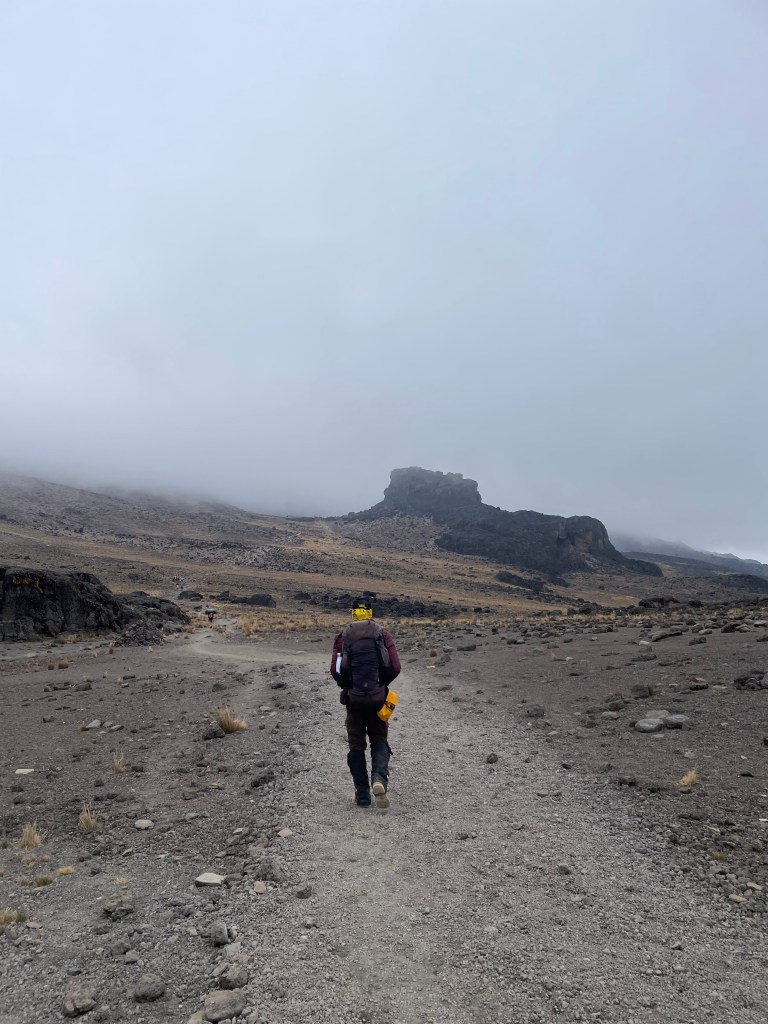
Before the climb, I planned to journal and do interviews for stories I wanted to pitch. I thought the hours alone would clarify what I wanted to do now that I was unemployed. None of that happened.
Instead, I spent most of the week relearning survival basics—walking, drinking water, staying positive, and, most importantly, breathing. My only focus was to keep moving, and that one task alone felt overwhelming.
There is no elevator down.
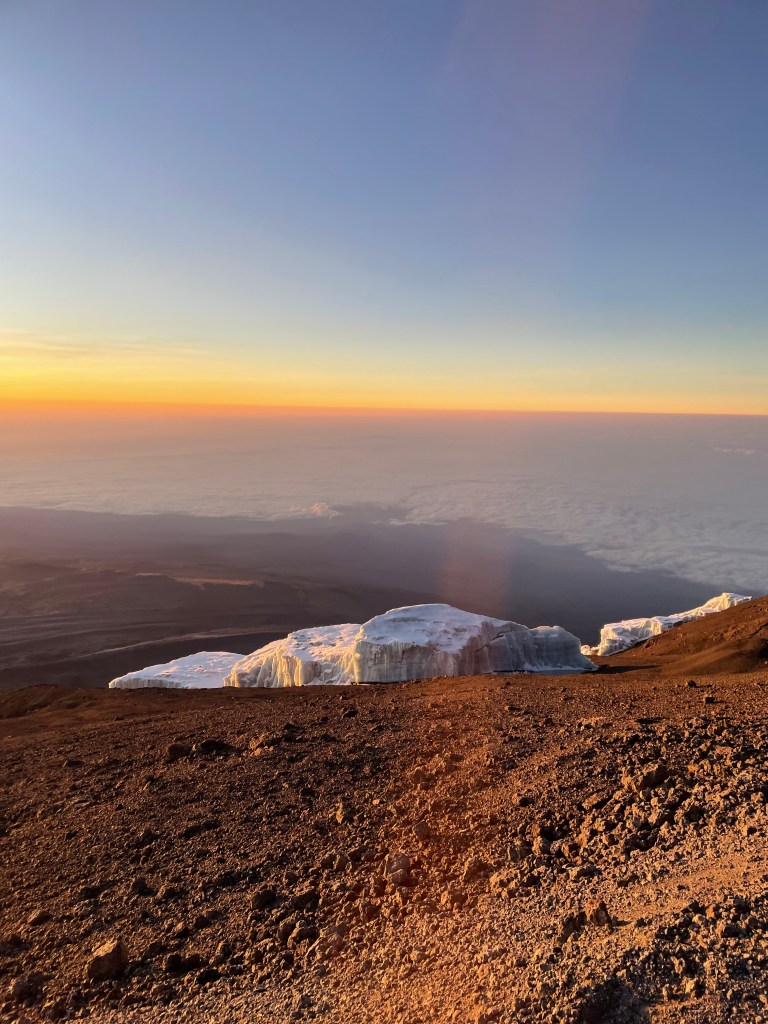
I just wanted to get high, all 5,895m. During the eight-hour summit through the darkness of the night, I watched the sun come up and bounce off glaciers. I cried because seeing how far I’d come was so beautiful. Then I cried because I realized there was still more to go. I was so tired when we finally reached Uhuru Peak that I couldn’t even be bothered for a photo. I just wanted to take off the billion layers of jackets and sleep. My guides grabbed my arm and posted me next to the “highest point of Africa” sign.
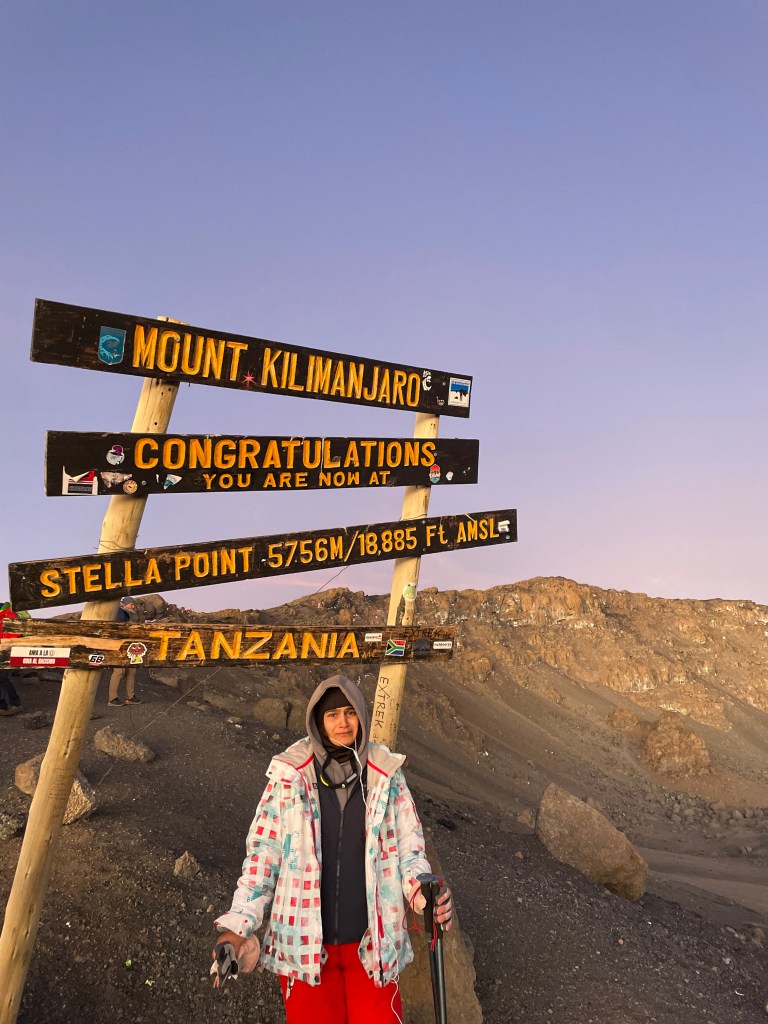
I remember asking my guides where the secret elevator was because there was no way I was going down on my feet. I offered to go into the fetal position for him to roll me down, but he said no. I reserve the right to not verbalize how I actually came back down to avoid reliving trauma.
I yapped a lot about what was going on in my head while climbing, but I think it’s important to also yap about stuff that barely crossed my mind:
My appearance
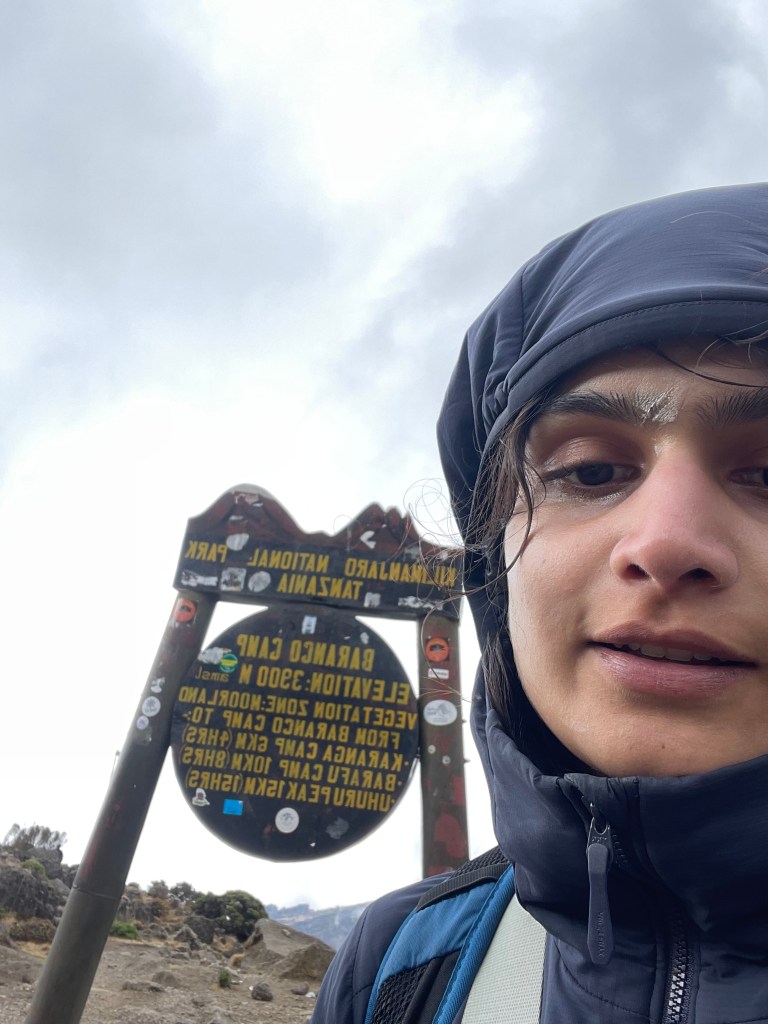
I barely took selfies on this trip, but the ones I did take were hideous. I hadn’t washed in six days. No skincare, just wet wipes. I wore the same clothes daily and slept in them, too. When I saw my face in a bathroom mirror after coming down, I realized I genuinely hadn’t cared about my appearance. It was a bit liberating.
Lol, jk—I would have given a kidney for a shower.
“I have no money and no prospects, and I’m already a burden on my parents.”
I know this. I live this. I feel this in my core. But I totally and completely forgot about it.
I’m just a girl

I worried a lot about being alone on a mountain with a bunch of men and crows, but everyone was super lovely and supportive.
I feel like I’m ending this post a bit abruptly, but it’s my blog, and I can do whatever I want. Kilimanjaro awaits if you feel like doing something stupid and expensive.

 Zahra Travels